Showing posts with label Aboriginal & Torres Strait Islands. Show all posts

Wednesday, 4 July 2018

Spirituality/Secularism in the Parliament of Australia


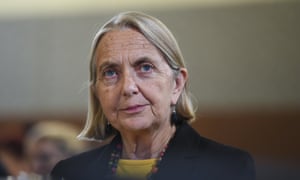
The Greens senator Lee Rhiannon wants the Lord’s prayer to be replaced by a secular statement.
 The Greens senator Lee Rhiannon wants the Lord’s prayer to be replaced by a secular statement. 
Photograph: Lukas Coch/AAP

The Lord’s prayer would be abolished from the start of Senate sittings and replaced by a statement that includes religious and non-religious beliefs, under a push instigated by the Greens.
On Wednesday the Greens senator Lee Rhiannon will move a motion for a Senate inquiry into the proposed alternative: “Senators, let us in silence pray or reflect upon our responsibilities to all people of Australia and to future generations.”
The move is supported in a letter signed by progressive religious leaders including Fr Rod Bower, of the Anglican parish of Gosford, the reverend Margaret Mayman, of Pitt St Uniting church, and rabbi Jeffrey Kamins of the Temple Emanuel at Woollahra.
Guardian Australia understands the Greens believe they have enough support to set up an inquiry. Senators Stirling Griff and Rex Patrick confirmed Centre Alliance will support the motion, although Patrick noted this is “not the same thing as supporting replacing the prayer”.
Griff suggested the alternative prayer “ensures the moment is more relevant and personal for the individual”.
Senate sittings begin with the Lord’s prayer, a Christian prayer including the words “our father, which art in heaven, hallowed be thy name”.
Rhiannon said the statement that opens parliament “should be inclusive of people of all beliefs and faiths”.


“The Greens are suggesting the proposed new opening statement be referred to the Senate’s procedure committee for a public inquiry that better reflects the secular nature of our country and our parliament,” she said.
“A secular nation like Australia should be free from religious bias and not impose religious influence on citizens or parliamentarians.
“We should work for religious tolerance in the structures of government.”
Mayman said it was “time for the Senate to move on from an opening prayer that belongs to the era when Christianity as the majority religion in Australia was given precedence over other faiths and belief systems”.
“It is time to embrace words that are inclusive and respectful of religious diversity,” she said.
“The archaic language of the current prayer suggests that religious ideas are anachronistic and irrelevant in a pluralistic society.
“The use of the Lord’s prayer is not respectful of Christian faith, as it reduces the prayer that Jesus taught his followers to pray to a rote recitation in this context.”
The letter signed by religious leaders notes the Australian Capital Territory’s legislative assembly begins with a similar non-denominational statement.
“We believe this statement more accurately reflects the multicultural nature of our diverse communities,” it said.

Friday, 18 May 2018

Indigenous religion not protected, ANU academic tells Ruddock review

by Andrew Brown
Sydney Morning Herald
6 April 2018 

A leading Canberra academic has told the Turnbull government's review into religious freedom that Aboriginals are not adequately protected to practice their religion.

Ernst Willheim, a visiting fellow at the Centre for International and Public Law at the Australian National University, said the current legal system failed to accommodate the difference between Aboriginal and "mainstream religions".

An ANU fellow has said the current legal system fails to accommodate differences between Indigenous religion and "mainstream religions".

The submission was one of more than 16,000 received by the review, headed up by former Attorney General Philip Ruddock, recently made public.

The inquiry was announced last year following concerns surrounding religious freedom after same-sex marriage was legalised.

The religious freedom review is being headed by former Howard government minister Philip Ruddock.

In his submission to the review, the expert on Aboriginal heritage protection said Indigenous Australians were not fully protected by the law to practice their religious beliefs.

"Aboriginal religious or spiritual beliefs commonly require that particular knowledge be restricted to certain individuals or groups and not to be further disclosed," Mr Willheim said.

"Yet the statutory procedures for obtaining protection ... require full disclosure of the details of secret knowledge or beliefs to non-Aboriginal decision makers and to the opponents of protection.

"Disclosure of secret knowledge or beliefs through a public inquiry process destroys the values Aboriginal people seek to protect."

The academic said current laws enacted to protected the religious beliefs of Aboriginals have failed to achieve their purpose.

Mr Willheim said there was a "collision" of the core values of Aboriginal religious practices and the Australian legal system.

"The Australian legal system establishes a non-Aboriginal process for the authentication of Aboriginal religious belief," he said. "That in itself is inherently offensive to Aboriginal people."

A key part of Mr Willheim's submission noted secrecy was an essential part of Aboriginal religious beliefs, with elders guarding knowledge and passing it on selectively to the next generation.

According to the ANU visiting fellow, Indigenous people would have to break these traditions if they were required in a legal setting.

"These beliefs, ceremonies and rituals form part of the religious life of the community. Access to religious knowledge is a basis for power in the community," he said.
"Aboriginal religions are fundamentally different from mainstream religions but the legal system fails to accommodate the difference.

"International law principles and international authorities clearly support the view that the rights of Indigenous people to pursue their religious, spiritual and cultural practices are important legal rights."

While 16,000 submissions were received by the review, almost 2000 were made public before the Easter weekend.

The rest of the submissions are due to be published on May 18, when the review is expected to hand down its report.

Tuesday, 15 August 2017

Australian Aboriginal Quakers?

From Sally O'Wheel posted on the Facebook site of Quakers Australia ---

Sally O'Wheel shared a link.
This is so interesting! Earnest Westlake was a Quaker, (his mother was a Neave). He collected thousands of stone tools but also interviewed Aboriginal people. At this time they were considered to be 'extinct' and his interviews were discounted by later historians because they weren't regarded as 'real' Aborigines. But in fact these people had kept their culture and language alive. I am reading about the descendants of Fannie Smith (née Cochrane) and about their spirituality which Earnest Westlake thinks is very Quakerly. 
He says: 
' I seem to have discovered what was missed by those excellent Friends, Backhouse and Walker in their reports on the Tas Blacks, ie that the Blacks were themselves Quakers, in that they sought for the guidance of the Spirit, and lived more or less in the light of it. Certain it is that Mrs Smith, who had come under Christian influence, was a Quakeress of excellent quality.' Fascinating book!
In 1908 English gentleman Ernest Westlake packed a tent, a bicycle and forty tins of food and sailed to Tasmania. On mountains, beaches a...
GOODREADS.COM

Thursday, 27 August 2015

Islam in Australia - a very ancient connection


It should be remembered that settlers in Australia since 1788 
have long had Muslims in their midst. 
 Northern Australia and indigenous people have a longer history. 
 The Editor of this blog can recall a news item 
from when she lived in the Northern Territory between 1993-97. 
A very elderly woman had returned to Australia. 
She had left many decades before because she married a Macassan 
and had now come back to spend her last years on country. 

Each year from the early to mid-1600s to 1906 AD1 at least a thousand ‘Macassans’ – from the extreme corner of the island of Celebes (now modern day Indonesia) – voyaged to northern coastal Australia in search of trepang. Otherwise known as bêche-de-mer, sea cucumber or sea slug, trepang was considered a delicacy in China where it was later sold. Early records including navigator and explorer Matthew Flinders’ A Voyage to Terra Australis (1814) commonly refer to the trepang fishermen as ‘Malay’, but a more accurate term is ‘Macassan’ (Macassar was the major port of origin for many of the boats). During the three hundred or so years of seasonal contact, the coastal societies of northern Australia, from the Kimberly region, across Arnhem Land and down into the southern Gulf of Carpentaria underwent a dynamic process of transformation (Clarke 315-16). The centuries long encounters between Aboriginal and ‘Macassan’ societies produced both wanted and unwanted social change for coastal Aborigines. After all, Indigenous meetings with foreign ‘Macassan’ communities were formed against the backdrop of imperial incursion and cultural expansion from elsewhere. 

Please read more here

Friday, 21 February 2014

Listening to the Land in Autumn with the Mornington Peninsula Interfaith Network and the guidance of an Gunditjamara Elder

Listening to the Land (Autumn)

Listening to the Land is an initiative of the Mornington Peninsula Interfaith Network. It seeks to bring people of different faiths and cultures  together to connect or reconnect with the Land and to be moved to care for the Land.

Our Autumn ‘Listening to the Land’ program is at Green’s Bush, Main RidgeSunday 23rd March, 2014,  11am .We will be celebrating Harmony Day.

Program begins at 11:00am and includes an introductory talk, a listening walk, a meditation and a shared lunch. The walk and meditation will be led by Gunditjamara Elder, Uncle Lionel Lauch.


Please note:
BYO Vegetarian food - something easy to share.
Plates and cups will be provided.

Look forward to seeing you there – sunshine or rain. The walk is mildly strenuous. The event is by donation. 
·        Venue: Green’s Bush, Main Ridge, Mornington Peninsula
·        Date: Sunday, 23rd March 2014
·        Time: 11am–2:00pm  (Lunch will be @ 1pm - BYO Vegetarian to share)
·        Cost: By Donation
·        Meeting Point: Baldry’s Crossing Car Park (@ 10:50am)
·        More information: Judy O’Donnell 0400 088 410 
·        Map Route: 
About Harmony Day
Harmony Day (21 March) is a day of cultural respect for everyone who calls Australia home – from the traditional owners of this land to those who have come from many countries around the world. By participating in Harmony Day activities, we can learn and understand how all Australians from diverse backgrounds equally belong to this nation and enrich it.
 

About Greens Bush, Main Ridge, Mornington Peninsula
Greens Bush is the largest remnant of bushland on the Peninsula and is home to various wildlife - Birds on the forest floor, in the scrub, in the tree canopy... there is lots of birdlife in Greens Bush. Look for wrens, honeyeaters, parrots and birds of prey such as the Black-shouldered Kite and Wedge-tailed Eagle. At morning or dusk, you can often see kangaroos feeding in the open grasslands. Black Wallabies prefer the forest and are well camouflaged in the shadows with their darker coat. However, most mammals in the park are nocturnal. As the light fades, listen for the soft twittering of Ringtail Possums or Sugar Gliders. The Little Forest Eptesicus Bat makes a higher-pitched call as it searches for insects, usually eaten on the wing.

The Mornington Peninsula Interfaith Network (MPIN) 
acknowledges the traditional owners and custodians of the land, 
the Boonwurrung/Bunurong people, 
part of the Kulin Nation, and their elders past and present.

DOWNLOAD FLYER BELOW

Thursday, 5 September 2013

Edward Koiki Mabo - an Australian hero. His biography written with Noel Loos has been updated and re-issued.

The decision in the High Court of Australia in Mabo v Queensland No. 2 1992 (Cth) which gave legal recognition to the traditional land interests of Aboriginal Australians is a major factor in Australian life to-day.  Across the nation, Aboriginal nations, clans, families are working to make the most of their life in modern Australia based on this recognition and how access to their own land can provide economic benefits and security.

University of Queensland Press (UQP) has now re-issued with some updating the original book written by Koiki Mabo and my friend Noel Loos. My friend Noel is retired these days but had a hectic time with the filming and subsequent media interviews relating to the television documentary, Mabo.

Professor Noel Loos teaches the history of black-white relations in Australia at James Cook University in Townsville. He has conducted close research into Aboriginal mission history, frontier conflict, the place of Aborigines in colonial society, and the evolution of government policies for Aboriginal and Torres Strait Island people. In the 1970s he pioneered the development of teacher education programs in Queensland for Aboriginal and Islander people. Professor Loos has published widely on indigenous history and politics, including: Invasion and Resistance; Aboriginal-European Relations on the North Queensland Frontier 1861-1897 (1982); Succeeding Against the odds: Townsville’s Aboriginal and Islander Teacher Education Program (1989); and Indigenous Minorities and Education: Australian and Japanese Perspectives of their Indigenous Peoples, the Ainu, Aborigines and Torres Strait Islanders (1993). A Friend of Koiki Mabo for 25 years, Professor Loos edited Edward Koiki Mabo: His Life and Struggle for Land Rights, which was published by UQP in 1996