Pope Francis met Aung San Suu Kyi in the Vatican in May 2017
CREDIT: TONY GENTILE/ REUTERS POOL
28 AUGUST 2017 • 2:00PM
Pope Francis will visit Myanmar in November, the Vatican has announced, amid mounting concern at treatment of that country’s Rohingya Muslim minority
Monday’s announcement came as thousands of refugees attempted to flee into neighbouring Bangladesh after a renewed bout of violence between local insurgents and the army in the restive province of Rakhine.
Members of Myanmar's Muslim Rohingya ethnic minority attempt to enter Bangladesh
CREDIT: MUSHFIQ ALAM/AP
The pontiff on Sunday decried the “sad news about the persecution of the religious minority of our Rohingya brothers,” urging worshippers gathered in St Peter’s Square in Rome to pray that God “saves them.”
The Myanmar government has reported over 100 deaths since Friday, when armed rebels, reportedly from a group called the Arakan Rohingya Salvation Army, attacked 30 police outposts with knives, sticks and crude bombs.
Advocates for the Rohingya told Al Jazeera that at least 800, including dozens of women and children, have been killed in the violence. The claim could not be independently confirmed.
The army has reportedly surrounded the townships of Maungdaw, Buthidaung and Rathedaung, home to 800,000 people, and imposed a nighttime curfew.
An estimated 3,000 refugees entered Bangladesh over the weekend.
The violence marks a dramatic escalation of a conflict that has simmered in the region since October, when Aung San Suu Kyi’s government sent thousands of troops into villages in Rakhine after nine policemen were killed by a suspected Rohingya armed group.
Over 87,000 Rohingya refugees have fled to Bangladesh since amid claims of arson and abuse by the army.
In February, a UN investigation concluded that there had been grave and widespread abuses by the military that “very likely” amounted to crimes against humanity.
The treatment of Myanmar’s 1.1 million strong Rohingya minority, who are denied citizenship in the mainly Buddhist country has emerged as one of the biggest challenges for Aung San Suu Kyi since the former political prisoner secured a landslide in the November 2015 elections.
The Nobel peace laureate has been accused by some Western critics of defending the army’s actions and of not speaking out on behalf of the long-persecuted minority.
Benedict Rogers, East Asia team leader at human rights group Christian Solidarity Worldwide, said the pope’s visit to Myanmar could be an important step towards “genuine peace, reconciliation and justice.”
“To have a worldwide Christian leader such as Pope Francis speaking out and standing in solidarity with a persecuted Muslim community sends a vital message about the importance of freedom of religion or belief and inter-religious harmony,” he said.
~~~~~~
The above is this year's sadness and murder.
Below is the 2015 crop of sadness and murder.
Coming closer to us in Australia.
These refugees below made it to Indonesia.
Indonesia has rescued almost a thousand boat people, believed to be Rohingya refugees, stranded off Aceh coast. (Photo source: Reuters)
Banda Aceh, GIVNews.com –Almost 1,000 likely Rohingya refugees from Myanmar, including children and women, were rescued in Aceh after two wooden boats stranded off the coast on Monday (11 May 2015).
The first group of 547 refugees was spotted on Sunday morning near the city Lhokseumawe in Aceh, the westernmost province of Indonesia. The overcrowded boats were towed to shore by Indonesian fishermen after they were reportedly running out of fuel. They have been sailing from Thailand since seven days ago and some of the refugees passed away in the journey. The second group was spotted on Monday around 2 AM local time. The evacuation process was carried out by the Search and Rescue Agency in Aceh.
Causes of fatality include dehydration, starvation or abuse by boat crews. Out of all the immigrants who can be rescued, fifty have been sent to the hospital for treatment.
“In general, they were suffering from starvation and many were thin,” said the Chief Police of North Aceh Adj. Sr. Comr. Achmadi, as quoted by the
Jakarta Globe.
The refugees will be placed in several shelters and will go through immigration process as well as health and security checks. The International Organization for Migration has sent their officials to Aceh to carry out investigation on this issue. Meanwhile, the local government has been providing food and water for the refugees. Yet, the supply is limited and would not be comparable to the overflowing number of refugees.
According to the UN Refugee Agency, UNHCR, in the first three months in 2015, there have been an estimated of 25,000 Bangladeshis and Rohingyas refugees who boarded people-smugglers’ board, which has doubled the number of the same period in 2014. The long-persecuted Rohingya people have been fleeing out of Myanmar, also known as Burma, due to the ‘ethnic cleansing’ efforts on the minority Muslims. In spite the fact that the Muslims have been living in Myanmar for generations, they are still perceived as invaders from Bangladesh by people in Myanmar who are majority are Buddhists.
The United Nations listed Rohingya as one of the world’s most persecuted minorities. Previously, Malaysia has also received more than 1,000 refugees from Myanmar and Bangladesh in Langkawi. The arrival of refugees in Malaysia and Indonesia might be due to the fact that there was a crackdown on human trafficking in Thailand, one of the first South East Asian destinations in the human smuggling network. The discovery of mass graves and captives in southern Thailand has prompted a crackdown which led to the arrest of several local officials, powerful politicians, tourism business operators and police officers. The refugees reportedly suffered from extortions, abuses and rapes at camps located in southern Thailand.
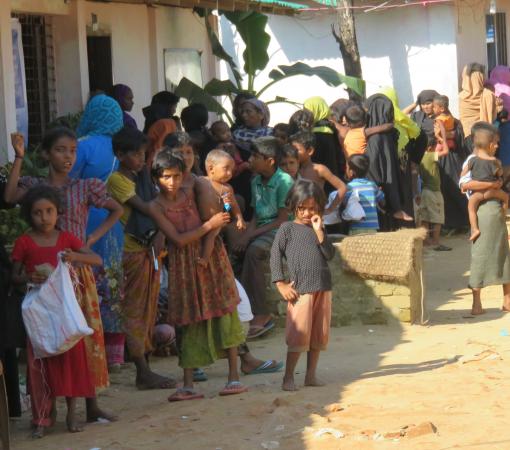
Contrast this picture of "human debris"
with the photographs on this post
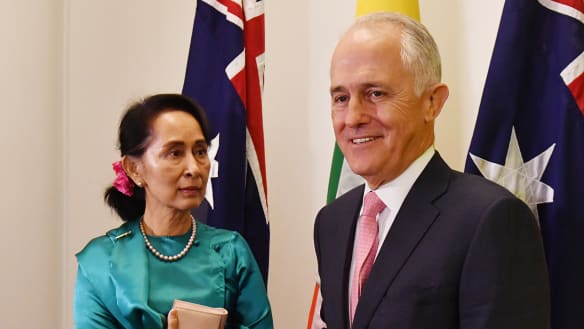
of a beautifully groomed Aung San Suu Ky.
Aung San Suu Kyi has denied her government
is involved in ethnic cleansing