Showing posts with label Religious violence. Show all posts

Friday, 19 October 2018

A Hindu Temple in Sydney has been desecrated by vandals

A Hindu Temple in Sydney has been desecrated by vandals. We join our hearts to the Hindu Community and stand with them in solidarity against such hatred and bigotry. https://www.sbs.com.au/…/we-never-expected-this-to-happen-i…
It is not yet known who is responsible for the attack but given the word "Jesus" was scrawled on the inside of the temple it is not unreasonable to imagine that the perpetrates of this crime are the same kind of extreme right wing "christianist" terrorists that that have now desecrated our worship space on two occasions, and abused worshipers at a Brisbane Mosque.
This kind of terrorism cannot be tolerated in Australia and all religious leaders must stand in solidarity with the Hindu Community.
Fr Rod

Friday, 26 January 2018

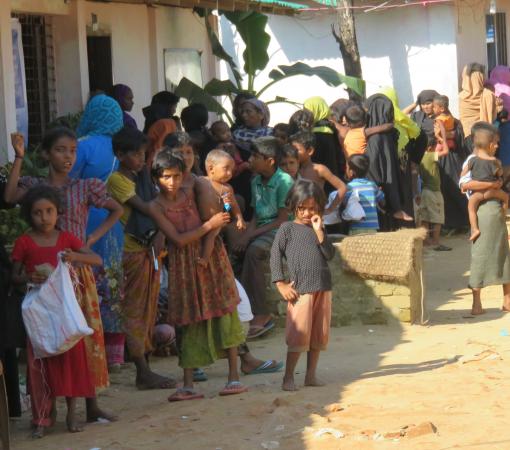
Buddhist Myanmar and the Muslim Rohingyas

Some thoughts from The Editor of Beside The Creek on which readers might ponder as they read this article:

Firstly, so many Westerners have romantic ideas about Buddhism as a peaceful religion and lifestyle.  So what do such people make of what is happening in Myanmar?   Christianity professes peace too and we know that it has had difficulty in bearing witness to this attribute.  So what do we think when Buddhism is acting in a violent way to a whole class of people on the basis of their religion? Is this in the same category as Nazi Germany and the Jews?

Secondly, what is the role - from an objective viewpoint - of the role of Aung San Suu Kyi in what is happening in Myanmar.  Aung San Suu Kyi is a feted woman who has lived a life of privilege.  True, she has had her enemies and difficulties.  However, in no way can we see that she has suffered in the way the Rohingyas have suffered and are suffering. She has not been the victim of genocide as the Rohingyas have been and continue to be. Powerful people around the world are on her side. It is difficult to say who or what is on the side of the Rohingyas that will free them from their suffering and allow them to return to their homeland. 

Reworking the Colonial-Era “Indian Peril”: Myanmar’s State-directed Persecution of Rohingyas and Other Muslims

“It would be best if they were not here. I do not want to see them in this country. Since the dawn of history Indians have been the leaders of attacks against the Burmans on behalf of the white faces.”
— Saithan (Burmese writer), New Light of Burma, 6th June 19371
“(Buddhist) Brother, you might already have heard of the news about the Buddhist mob in Rakhine lynching a group of Rohingyas in broad day light. Even in Yangon if you are a Muslim and say something wrong or behave slightly irritated at a teashop or a bus stop the Buddhists would howl “you mother-fucking Kalar (nigger), how dare you say something or behave like that.” If you go to certain neighbourhoods and run into a group of drunkards they recognize your Indian features and beat you up. So, I too fear for my life living in this country of ours. I was born here. And this is the only country I know I belong. Burmese is my mother tongue. Out of fear and despair, I have looked at different possibilities of going to work in Malaysia or trying visa lottery to USA. But the truth is I don’t really have any prospect for leaving my birthplace. I am stuck here.”
— A Burmese Muslim resident, 7 July 20172

Friday, 21 July 2017

INTERFAITH DIALOGUE A CUTTING-EDGE NECESSITY IN AFRICA

Story from Ngala Killian Chimtom

July 20, 2017

Picture at left:  Bishop Jean-Marie Benoit Bala of Bafia, Cameroon.  (Credit: Valérie leon (Travail personnel) [CC BY-SA 4.0], via Wikimedia Commons.)

Participants at a meeting of central African bishops this week recommended inter-religious dialogue as the way forward for the sub-region. They also reiterated claims that the death of Cameroonian Bishop Jean-Marie Benoît Balla was not a suicide, but that he was "brutally assassinated.”

YAOUNDÉ, Cameroon - Inter-religious wars in the Central African Republic, the excesses of the terrorist sect Boko Haram in Cameroon, and a steep rise in Christian revivalist movements are rapidly changing the religious landscape in the Central African sub-region, and paving the way for religious intolerance.

In the Central African Republic, the fight for political control became increasingly religious with the Muslim Seleka rebels wresting control of the capital Bangui in 2013 and looting, raping and killing the Christian-dominated Anti-Balaka. But when the Christians seized back the capital months later, they committed the same crimes against the Muslims.

In Cameroon and Chad, the Nigerian Islamist sect Boko Haram has become a source of continued attacks, killing at least 500 civilians since it started cross-border attacks in 2013. Across the entire area, a rise in Pentecostal movements and their extremist ideologies has taken sway. “The Central African sub-region is in crisis, and these crises are an expression of hate,” says the 86-year-old Archbishop emeritus of Douala in Cameroon, Cardinal Christian Tumi. “If I love my brother, if I love my sister, I won’t take up a gun to kill him,” he added.

In view of the troubling situation, some 80 Catholic bishops from the Central African Sub-region along with representatives from other Christian denominations and Muslim communities came together in Yaoundé for the 11th Forum of the Episcopal Conferences of Central Africa, with ecumenism and inter-religious dialogue at the centre of their discussions.


The bishops and their guests discussed “Islam in Central Africa today,” traditional African religions and inter-religious dialogue,” “Christianity, Islam and Politics,” as well as “dialogue between the Catholic Church and the different Islamic currents in Central Africa.”

READ THE ENTIRE STORY
AT CRUX MAGAZINE

Wednesday, 10 February 2016

From Transcend Media Service - Fundamentalism-Extremism-Violence

Fundamentalism-Extremism-Violence

EDITORIAL, 8 February 2016
Johan Galtung, 8 Feb 2016 - TRANSCEND Media Service
To navigate these difficult conceptual waters we need some rules. Here are three suggestions (the violence can be direct–as sometimes prescribed by the Abrahamic religions–or structural as by Hinduism):
  1. Anchor “religious fundamentalism” in religious scriptures taken literally according to the fundamentalists, not as “interpreted”;
  2. Anchor “extremism” in violent action, verbal or physical;
  3. Anchor “religious extremism” in violent action justified-legitimized by religious scriptures, by fundamentalists or not.
Fundamentalism has to do with inner faith, belief. Extremism has to do with outer violence against Other, and against Self (like flagellation for being a sinner). Keep them separate. And be careful.
We can have fundamentalism without extremism. The fundamentalist may believe much, beyond the beliefs of others, yet not cross the border to violence. We may say: let him-her do so; it is not obvious that fundamentalists are more violent than non-fundamentalists.
We can have extremism without fundamentalism. Most people exercising violence believe in nothing, beyond “doing their job”.
There are two criteria for “religious extremism”: violence and religious legitimation. That legitimation may be fundamentalist or not; could also be well-know quotes from the Scriptures. We might even speculate that for the fundamentalist faith may be sufficient.
The combination in “religious extremism” is vicious if it implies that violence will be supported by divine forces and/or that failure to be violent will incur their wrath. Probably a declining category.
Today’s secularizing, “enlightened” world brought us statism, nationalism, and their combination; secular fundamentalists and extremists, and their combination. They have given the world more violence for victory for whatever cause they design than religions. But with a rationality that may open for solving underlying conflicts.
How about the traditional “world religions” in this perspective?
The three Abrahamic and Hinduism with divine forces; and Buddhism, Daoism-Confucianism and Shinto without? Where do we find religious extremism as defined above; and where not? Obviously, some of it everywhere, nothing somewhere, but generally speaking?
Judaismn has religious extremism as right and duty to conquer and defend the Promised Holy Land (Genesis 15:18, wrath of divine forces in Deuteronomy, for structural violence Isaiah 2:1-4).
Christianity has religious extremism built as violence against non-believers (Luke 19:26)–hence also to spread Christianity–but has rules against retribution (turning the other cheek).
Islam has norms against spreading Islam by the sword, but uses violence against infidels, particularly against apostates, and uses violence for “retribution with moderation”.
Summary: Judaic religious extremism is territorial, Christian is missionary, Islamic is punitive. SUM: ex occidente bellum.
Hinduism has internal structural violence built into the caste system, with a history of direct violence to establish it and keep it. Nonviolence to cows serves as an opening to nonviolence in general.
Buddhism has violence in obscure texts but generally prescribes nonviolence. If Buddhists are violent (Sri Lanka, Myanmar, Thailand) it is not qua Buddhists, but as defenders of a state with Buddhism.
Daoism is ambiguous: every human holon has forces-counterforces, not necessarily violent; but a rising yin or yang may be “helped”.
Confucianism deplores “bad emperor” violence, but is feudal structural violence, with rights and duties both high up and low down.     Shinto is peaceful, but state Shinto was a construction inspired by Christian state religions justifying warfare external violence under Sun Goddess Amaterasu-o-mikami and Her offsprings, the Emperors.
Conclusion: not good enough to declare ex oriente pax.
How about the secular counterparts to religions, the ideologies, the isms? Backed by human forces of rationality and compassion, and by social forces across the domestic and global faultlines nature-gender-generation-race-class-nation-territory. Religions see them as parts of the divine order; secularism sees them as changeable, for worse (slavery, colonialism, war), for better (human rights, Art 28).
Enlightenment came with capitalist growth against nature and the working classes; with the rule of Men, Old/middle-aged, White; class with competitive mobility; nationalism and statism. Isms emerged, as dualist-manichean as God vs Satan, promising Paradise vs Hell, pitting Self- good vs Other-evil, with mechanisms for picking winners-losers.
Nature fights back, now possibly winning. Women, young and old, non-whites struggle nonviolently for parity. Afterlife Paradise and Hell no longer available, political parties fight for paradise=upper class rewards from capitalist growth against hell=poverty-misery; meaningful only if inequality prevails over distribution. Nationalism and statism struggle for parity and dominance, even globally; the mechanisms being war by the military and negotiation by the diplomats.
Secular fundamentalism means strong attachment to one side in the one faultline seen as fundamental: with this issue (gender, race, class, nation, state) solved, the others will follow automatically!
Secular extremism, fundamentalist or not, uses violence against the Other in gender, race, class, nation, state; if fundamentalist for the salvation of humanity, with paradise on earth around the corner.
Secularism is Western. It is rejected by Islam and Hinduism. Buddhism focuses on means: nonviolence; China on process: yin-yang. Only Japan under Abe follows US war logic. Western secularism may actually turn out to be an episode, yielding to religious revivalism.
Rather work nonviolently on very many conflicts and traumas than on one giant step toward salvation-paradise, even with violence.
____________________________________
Johan Galtung, a professor of peace studies, dr hc mult, is founder of the TRANSCEND Network for Peace, Development and Environment and rector of the TRANSCEND Peace University-TPU. He has published 164 books on peace and related issuesof which 41 have been translated into 35 languages, for a total of 135 book translations, including ‘50 Years-100 Peace and Conflict Perspectives,’ published by the TRANSCEND University Press-TUP.

This article originally appeared on Transcend Media Service (TMS) on 8 February 2016.
Anticopyright: Editorials and articles originated on TMS may be freely reprinted, disseminated, translated and used as background material, provided an acknowledgement and link to the source,TRANSCEND Media Service - TMS: Religious Fundamentalism-Extremism-Violence, is included. Thank you.

Wednesday, 25 November 2015

SKILLS TO HELP FIGHT ONLINE BIGOTS & HATERS


·      THE AUSTRALIAN
·      NOVEMBER 24, 2015 12:00AM
SKILLS TO HELP FIGHT 

ONLINE BIGOTS & HATERS

Children as young as 11 are being taught skills to identify and ­respond to online racism as a growing number of extremists take advantage of social media to promote messages of hate.
The B’nai B’rith Anti-Defamation Commission runs Click Against Hate in more than 60 schools across Victoria for ­students in Years 5 to 10.
“(The internet is) an ideal ­vehicle for those who want to disseminate hatred, bigoted rants, lies, bullying, conspiracy theories and even calls for violence, and thus provides a mask to individual users to unburden themselves anonymously,” chairman Dvir Abramovich said.
“Now, every extremist has a platform and a megaphone through websites, Facebook or YouTube. Young adults are therefore more vulnerable than ever.”
Dr Abramovich said anti-Semitism, Islamphobia, homophobia, misogyny and other cultural and racial prejudices were on the rise because there was an epidemic of internet hate which was easily ­accessible by students of all ages.
He said the children were often exposed when there were no adults present and so young ­people must be prepared to stand up for each other. He said while schools had good intentions of combating racism and prejudice, it often wasn’t their top priority, or they didn’t have the resources to ensure that anti-bias and diversity education were an integral part of the school curriculum.
“Cyber hate and extremist views migrate and are translated into conduct in the schoolyard ­because such material incites against minorities, and because students tend to verbalise and act out the racist views they absorb online on real-world victims,” Dr Abramovich said.
“Hate material creates anger and occasionally promotes violent acts against people of other races and religions.”
In southeast Melbourne, Stonnington Primary School Year 6 student Isabella said racism was a major problem that affected a lot of people but often seemed to be overlooked.
She said that while she didn’t think it was very common for children her age to be affected by racism she thought they might come across it when they reached high school and became more ­active on social media.
Fellow student Erin said she had witnessed online racism a few times, especially after the Paris ­terrorist attacks.
“I feel like online bullying can be more common because you can hide behind a screen and don’t have to face people or suffer consequences,” she said.


For more information about Click against Hate click here


Our mailing address is:
B'nai B'rith Anti-Defamation Commission
306 Hawthorn Rd
Caulfield South, Vic 3162
Australia

03 9272 5677


Website   Facebook    YouTube   Email

Tuesday, 17 November 2015

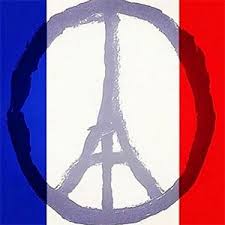
The Interfaith Service of Remembrance for those who were killed in #Beirut and #Paris will be held at 6pm on Thursday 19 November 2015.


Could readers of Beside The Creek, please note. There was not an awareness of the killings in Beirut when this story was done. The candle lighting part of the service at the Cathedral will include 44 candles for those killed in the Beirut attacks in addition to the 129 candles for those killed in Paris. The condolence books will include one for France and one for Lebanon.


A poignant candlelight vigil and service will be held in the city this week to remember victims of the Paris terrorism attacks.

In the wake of the tragedy, the Ballarat Interfaith Network will hold a service for people of all faiths at the Christ Church Anglican Cathedral on Thursday evening. BIN public relations officer Margaret Lenan Ellis said it was a way to draw the community together in act of love and hope.

A candle will be lit for each of the 129 victims of the terrorist attacks. Anyone attending the event, will also be able write personal messages in a condolence book which will be sent to the French embassy in Canberra in the coming weeks.

 “People will be able to write their own messages for peace, hope and forgiveness in the book,” Ms Lenan Ellis said. “We want it to be a way for people to counteract any messages of hate... to stand together in solidarity and peace, in the name of humanity. People of any faith are welcome to attend the service. It is open to everybody in the community.”

Ms Lenan Ellis said it was also crucial recent events did not further isolate the city’s Muslim community.
“We need to try and dispel any prejudices which surround people of Islamic faith that could be further fuelled by these attacks,” Ms Lenan Ellis said.
Her sentiment was echoed by Ballarat Regional Multicultural Council chairman Dr Sundram Sivamalai who urged the Islamic community not to remain silent.
“This violence is not was Islam represents,” Dr Sivamalai said. “It is not what Islam preaches and I would urge the Muslims leaders to have a voice in this tragedy.”

Victims will also be remembered at the Interfaith Network’s Tree of Life – One Voice project which will be held on November 21 between 10am and 3pm at the Buninyong Town Hall and the Uniting Church. 

Blue, white and red balloons will be released into the sky at the end of the Tree of Life event to remember those lost and symbolise hope for the future 
 The vigil will be held on Thursday from 6pm 
at the Christ Church Anglican Cathedral 
at 49 Lydiard Street Ballarat.

Monday, 16 November 2015

Faith Communities Council of Victoria (FCCV): Statement re #Paris and #Beirut


14th of November, 2015
Statement on acts of violence in Paris and Beirut
The Faith Communities Council of Victoria has issued the following statement in response to the recent acts of violence in Paris and Beirut: 
As leaders and people of faith, we offer our prayers and sympathies to family members and loved ones of those killed and wounded in Paris and Beirut. The loss of innocent life is senseless and we pray for the victims of these horrible attacks.
We unequivocally condemn these callous and senseless acts of violence - no belief, cause, or grievance justifies such acts of violence. We pray that the perpetrators are found and brought to justice.
We must remember these acts are committed by extremists, who although claim to be Muslims, do not represent the mainstream Muslim approach to religion or sanctity of life.
Faith Communities Council of Victoria is comprised of the following peak bodies:
Baha'i Community of Victoria, Brahma Kumaris Australia, Buddhist Council of Victoria, 
Hindu Community Council of Victoria, Islamic Council of Victoria, 
Jewish Community Council of Victoria, Sikh Interfaith Council of Victoria and Victorian Council of Churches.