Showing posts with label Sufism. Show all posts

Wednesday, 24 October 2018

Sufism, Muslims - and homosexuality

Rida Khan is a Sufi Muslim and a bisexual — and she wants to shatter some misconceptions.
Melbourne-based Sufi Rida Khan sitting in a cafe, looking out of a window.
"It's assumed that a lot of same-sex, bisexual or other gender diverse Muslims are having sex and that's actually a myth," says the 24-year-old aged-care nurse.
"It's like saying that all Muslim youth that are straight are engaging in heterosexual sex — and that's just far out, like, come on.

What is Sufism?

  • Sufism, or Tasawwuf as it is known in Arabic, is Islamic mysticism
  • Sufi orders can be found in Sunni, Shia and other Islamic sects
  • Sufi rituals, such as dhikr (devotional chanting), encourage introspection and spiritual closeness with God 
"Most of us are scared of having an aunty identify us with a guy or a girl."
Rida realised she was bisexual as a 17-year-old, but she waited a few years before announcing this to her Pakistani friends and family. She and her family are Sufis — followers of the mystical branch of Islam.
"My experience of coming out was in fact quite positive, quite different from the stories we hear in other gender-diverse communities," she says.
"But I think it does have a lot to do with the fact that my parents have lived in Turkey, we have lived in Japan, we've lived in Australia.
"When I came out it was like, 'meh, okay, you're still the same to me'."

'Not right' for the community

Not everyone supports Rida's openness about her sexual orientation.
While some progressive Muslim leaders support same-sex marriage, it is widely interpreted by Islamic schools of thought that same-sex intimacy is 'haram' or 'forbidden'.
"People think if you're bisexual, if you're homosexual … that's God testing you to prove that you can be a better person, that you can be a better Muslim and that you can rise above your so-called lust," Rida says.
"It's the women who are bullying me, the aunties who are really horrible [saying] 'Stay away from her, she's not a good person'.
"I don't know if it's jealousy or what it is, but they need to be kinder to gender-diverse women, they need to be kinder to women from Muslim minorities in this country."
'If you're bisexual, prove yourself'
But the pendulum swings both ways.
Rida says she's received just as much discrimination from Australia's LGBTQI community — because of her faith.
"It's like they constantly ridicule your religion," she says.
"They don't understand that religion can actually act as a tool for empowering you."
Faith isn't the only friction point. Rida says she's felt an expectation to fit in with Western expressions of queer sexuality.
"Not all people of colour from gender-diverse backgrounds actually relate to the mainstream sexuality, particularly along the lines of hypersexuality and self-objectification," she says.
"And we do get put down for it, like, 'if you're bisexual then prove yourself'."
Sometimes, prejudice can feel like it's coming from all sides.
"First, you're not accepted by the Muslim community because you're bisexual, then you're not accepted by the gender-diverse community in Australia for being Muslim," Rida says.
"Then you also identify as a woman of colour — so when discrimination and bullying happens, you don't know which of the three they are discriminating against you [for]."

Sexuality or faith: Being forced to choose

Siobhan Irving is an anthropologist, PhD candidate and a board member for Sydney Queer Muslims.
She converted to Islam as a 19-year-old and has spent the past five years collecting stories from gay and lesbian Muslims in Sydney and Singapore.
Ms Irving says Rida's story isn't unique.
"In the queer community — and just in general, really — many people do not understand why a same-sex attracted Muslim would still embrace their faith ... would still be proud of their religious community," she says.
"It's difficult for them to express both their identities as Muslims and as same-sex attracted people — they often feel that they must choose."
Ms Irving says last year's national plebiscite on same-sex marriage brought Islamophobic attitudes to the fore.
"People in the queer community — and elsewhere — presumed that this just meant Muslims voted against it, because the Western suburbs are known as being very much populated by Muslim communities," she points out.
In the aftermath, Ms Irving spoke to many LGBTQI Muslims who felt pressured to defend their faith in queer circles and spaces, if they disclosed it at all.

Solace through spirituality

Sufism or Tasawwuf, as it is known in Arabic, is not a sect of Islam, like Sunni or Shia, but rather a spiritual practice, and theory, that can be found in all branches of the faith.
Rida's parents, for instance, practise Sufism within the Sunni Hanafi tradition.
Meanwhile, Rida describes her faith as "Aboriginal-Sufi-centric Islam"; a practice influenced by Indigenous Dreamtime stories and her 'Baloch' bedouin ancestry.
Introspection, meditation and dhikr (devotional chanting) are core elements of Sufism.
Rida says these practises give her an inner strength to combat the external conflicts that come from being a bisexual Muslim.
"The modern Sufi community here in Melbourne looks something like a mix of hipsters [who] have a very deep intimate relationship with God," she says.
"[It's about] sitting together, discussing life issues, reading Rumi's poetry, and overall just really trying to do the best we can in a world which is largely right-wing or left-wing — we really fall somewhere in the middle."
According to Ed Husain, author of The House of Islam: A Global History, Sufi poets like Maulana Jalaluddin Rumi and Omar Khayyam celebrate an inner spirituality that can be overlooked in more hard-lined expressions of Islam.
"Their poetry ... is much more focused towards drawing to God and the divine through love, attraction, passion, hope and optimism, rather than [being] fearful of God and fussing over sins and hellfire and worrying about the consequences of whether, you know, your hair shows," he told Rachael Kohn on a recent episode of RN's The Spirit of Things.
"The fact that the Prophet Muhammad was reciting beautiful poetry was because he was internally in communication with the divine.
"And if you lose that internal communication, externality becomes ugly and rigid."
For Rida, Muslims and non-Muslims alike can gain joy from introspection.
"Sufism itself is just a practice to help you become closer to your divine," she says.
"[It tries] to get you to understand that the universe is a much bigger picture than what institutionalised religion has made it out to be."

Saturday, 8 September 2018

From The Golden Sufi Center: Oprah's SuperSoul Conversations --- available now on Podcast

The Golden Sufi Center
August 29, 2018
Dear friends,
Warm greetings from late Summer in Northern California.

Super Soul Sunday has just released a podcast of the interview with Oprah Winfrey and Llewellyn Vaughan-Lee.

Please feel free to share with those who might have interest.

With best wishes,
The Golden Sufi Center
www.goldensufi.org
New Podcast

New Podcast: 
Oprah Winfrey's Super Soul Sunday
Interview with Llewellyn Vaughan-Lee 


Oprah Winfrey invited Llewellyn Vaughan-Lee to have a conversation with her about Sufism, the ancient wisdom of the heart. Under the oaks at her California home, they discuss love, longing, mysticism, the search for something real, along with addressing the source of true happiness. This interview premiered on OWN (Oprah Winfrey Network) in Spring 2012.
Copyright © 2018 The Golden Sufi Center, All rights reserved.
unsubscribe from this list    update subscription preferences

Tuesday, 31 July 2018

From The Golden Sufi Center

The Golden Sufi Center
July 30, 2018
 
Dear friends,
Warm greetings from the golden Summer hills of Northern California.

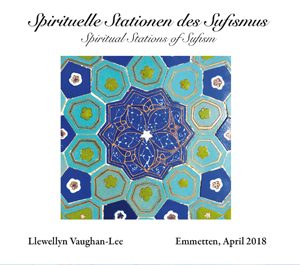
We have just released two new audio recordings: Journey of the Soul, talks and questions from the June 2018 event with Llewellyn Vaughan-Lee at Mercy Center in Burlingame, California; and Spirituelle Stationen des Sufismus (Spiritual Stations of Sufism),talks and questions from the April 2018 retreat with Llewellyn Vaughan-Lee in Emmetten, Switzerland.

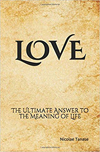
Also available are two new articles by Llewellyn Vaughan-Lee: The Sacred Space of the Heart in Sufi Journal (excerpt available online, full piece in print issue only),  and A Lover's Journey: A Story of the Sacred Feminine at Heartfulness.org; as well as a chapter he contributed to the recently published anthology, Love: The Ultimate Answer to the Meaning of Life, edited by Nicolae Tanase.

Please feel free to share with those who might have interest.

With best wishes,
The Golden Sufi Center
www.goldensufi.org

New Audio: Journey of the Soul

Llewellyn Vaughan-Lee, June 2018
Mercy Center, Burlingame, California

The first part of the talk explores the evolution of the soul and how it finds meaning in life. The second part describes the esoteric work of giving birth to the soul, or Self, as a living consciousness within the heart of the wayfarer, and the energy and container that is needed for this greatest mystery:
"My heart is light upon light,
a beautiful Mary with Jesus in the womb." 

—Rumi
Part 1: 36 min
Part 2: 27 min
Questions: 15 min

To Order: Single CD $12, MP3 Download $9
For those in UK & Europe: The CD will be available from the UK office starting from the event on August 25th, and from our EU office starting around August 10th.

New Audio: Spirituelle Stationen des Sufismus
(Spiritual Stations of Sufism)

Llewellyn Vaughan-Lee, April 2018
Retreat in Emmetten, Switzerland

The Naqshbandi Sufi describe numerous spiritual stations on the Sufi Path. In these talks Llewellyn Vaughan-Lee comments on several stations and explains how they help the traveler on the Path to live the inner experiences in the everyday life of a human being.

Die Naqshbandi Sufi beschreiben zahlreiche spirituelle Stationen auf dem Sufi-Weg. Llewellyn Vaughan-Lee erläutert in diesen Vorträgen verschieden dieser Stationen und zeigt auf, wie sie den Reisenden auf dem Pfad darin unterstützen, die inneren Erfahrungen als Mensch im Alltag zu leben. 
CD 1: (77 Min.)
Talk 1: Einführung; Wohlgefallen; Rechenschaft; Furcht & Hoffnung, Armut (Introduction; Good Pleasure; Reckoning; Fear & Hope; Poverty)
Talk 2: Wahrhaftigkeit (Truthfulness)
CD 2: (76 Min.)
Talk 3: Wachsame Aufmerksamkeit; Wohltätigkeit; Nähe; Aufrichtige Hingabe; Vernichtung und Verweilen (Vigilant Awareness; Beneficence; Nearness; Sincere Devotion, Fana and Baqa)
Talk 4: Bekenntnis der Einheit; Loslösung; Affirmation der göttlichen Unvergleichbarkeit; Dienerschaft (Affirmation of Oneness; Disengagement; Affirmation of Divine Incomparability; Servitude)
4 talks, egl./dt. übersetzt (in English with simultaneous German translation)
To Order: 2-CD set, available from the EU office only: SFR. 21.-/ EUR 17.-, Bestell - Nr.: LC 113
Or MP3 Download: US $16 

New by Llewellyn Vaughan-Lee


The Sacred Space of the Heart

Published by Sufi Journal

With simple and powerful imagery, the man the Sufis call the Greatest Shaykh speaks of a space that knows no boundaries or divisions, but belongs to love. For the mystic, for the lover, everywhere is a place of devotion, a place of meeting our Beloved. This world—with its myriad forms, light and darkness, sadness and joy—is a sacred space, a place where love reveals its secrets, where divine oneness comes to meet us. All around us is an unending revelation... Read more at Sufi (excerpt available online, full article in print issue only)


A Lover's Journey: A Story of the Sacred Feminine

Published online at Heartfulness.org

When I was nineteen I met my teacher, a Russian-born woman in her mid-sixties, recently returned from India where she had been trained by a Sufi master. Four years later, sitting in her small meditation group, I met and fell in love with a young woman recently arrived to London from Israel, who was to become my wife. As an intense young man, focused on meditation and aspiring to realize a formless Truth, the Sufi path unexpectedly opened me to the mystery of the feminine, and to the wonder of love both human and divine, formless and tangible... Read more at Heartfulness.org


Love: The Ultimate Answer to the Meaning of Life
edited by Nicolae Tanase


In this recently published anthology on Love, Llewellyn Vaughan-Lee contributed a chapter: Meaning and the Song of the Soul.  
About the book: The love molecule, the feast of love, the grand reunion, the song of the soul, the universal force of love, the experience of true love, heartbeats, breath, destiny, chocolates, pure unlimited love, the breath of life, the art of love and faith, eternal light, the gift of unconditional love, remembering the divine source, beloved, Rumi, whispers of the heart, soaring as a soul, the wisdom of the heart, pouring love...... that’s what awaits you between the pages of this book. For Love alone is the Greatest Power.
Available from Amazon.com, or in the UK at Amazon.co.uk
Copyright © 2018 The Golden Sufi Center, All rights reserved.
You are receiving this list because you opted in at our website.

Our mailing address is:
The Golden Sufi Center
PO Box 456
Point Reyes StationCA 94956

Add us to your address book
unsubscribe from this list    update subscription preferences

Wednesday, 13 June 2018

Spiritual ecology : the sacred in everyday life


Spiritual Ecology: 10 Practices to Reawaken the Sacred in Everyday Life offers inspiring and practical guidance for reconnecting to the sacred in every day life and transforming our relationship with the Earth. Describing the power of simple, daily practices such as Walking, Gardening, Cooking with Love, and Prayer, this small book supports profound changes in how we think about and respond to the ecological crisis of our times.
Our groundbreaking book, Spiritual Ecology: The Cry of the Earth, (now in its second edition)—which included spiritual perspectives on climate change, species loss, deforestation, and other aspects of our present environmental crises from renowned spiritual teachers, scientists, and indigenous leaders—drew an overwhelmingly positive reaction from readers, many of whom are asking: "What can I do?"
Spiritual Ecology: 10 Practices to Reawaken the Sacred in Everyday Life answers that question with inspiring, personal anecdotes from the author—Sufi teacher Llewellyn Vaughan-Lee—and simple practices we all can do. Rooted in the mystical foundation of the world's great spiritual traditions, with a particular connection to Sufism, these timeless practices remind readers of our deep connections to life, each other, and the Earth, and invite a return of meaning to our desecrated world.
As Rumi says, "there are a thousand ways to kneel and kiss the ground," and it is this sacred ground that is calling to us, that needs our living presence, our attentiveness. This small book offers simple ways to reconnect so that we can once again feel the music, the song of our living connection with the Earth.
g

TABLE of CONTENTS
Introduction
6. Cleaning
1. Walking
7. Simplicity
2. Breathing
8. Prayer
3. Gardening
9. Death
4. Seeds and Their Stories
10. Meaning and the Sacred
5. Cooking with Love
Notes & Acknowledgements

g
EXCERPTS
Ch 1—Walking:
This is a practice that has been with me since my teens—when I first started to meditate I also needed to walk. It was not taught or learned, but came as a need, a way to be, an antidote to much of the world around me—a world of people and problems, demands and desires. When one foot follows the other and the day has hardly begun, it seems these demands cannot touch me, as if I am immersed in something simpler, more essential. Placing each foot on the earth is a practice, but a practice that comes from my own roots, not a book or a teacher. Later I came to hear it called 'walking in a sacred manner,' and it is sacred, a return to what is sacred. But it also is deeper or more primal thanany purpose. Nature speaks to me and I listen. Nature calls and something deep within me responds, and I just need to give it space. I am part of a life far greater than any 'me.'(p. 2)
_____________________________________
Ch 2—Breathing:While we are alive, with each cycle of the breath the soul makes its journey into this world and then back to the Source. Spiritually we aspire to make this journey conscious. It is the lived prayer of the soul, an offering of our self to the mystery of life and its all-embracing relationship to the Divine. With each breath we consciously connect the two worlds, the world of the spirit and the physical world. We are present in the love affair that is the relationship between the Creator and the creation. (p. 10)
_____________________________________
Ch 3—Gardening:Recently I have loved to grow potatoes. I made two new beds for my potatoes, dug and composted, and planted my seed potatoes, and then waited. As I said, I am not a natural gardener, not naturally in tune with the rhythms of the Earth. This has been a gift that life has unexpectedly offered to me—this simple joy in waiting, watching the shoots begin to come from the soil, and then finally putting my fingers in the soil to dig up my potatoes, feeling the wonder of so many potatoes from a single seed. Of course these are not the perfect potatoes bought from the store. These are my own potatoes, cherished because I planted them, and their imperfections do not bother me. I love their taste, sweet and buttery. In my potatoes the Earth has given me more than abundance and nourishment; it has also brought this joy I had never expected—a simple primal joy that is a remembrance of life. (p. 21)
_____________________________________
Ch 4—Seeds and Their Stories:What I experience in my small garden is part of a story that has held us for millennia. It has given life meaning and sustenance. But today we are losing both our seeds and their stories. The biodiversity that was central to life for thousands of years is being lost. We are becoming a monoculture with a scarcity of seeds, a scarcity so severe that people have even created seed banks in the frozen North to protect our heritage of seed diversity. (p. 27-28)
_____________________________________
Ch 5—Cooking with Love:Through being attentive to the preparation of our food we bring an awareness into a basic substance and sustenance of life. Just as being aware of the breath is central to spiritual life, reconnecting us with life's essence, so is the simple art of cooking. What is more satisfying than a bowl of rice and vegetables that you have prepared and cooked with attention—what is a greater gift to a visitor and friend? (p. 38)
_____________________________________
Ch 6—Cleaning:There is a simple spiritual practice that is often overlooked—the art of cleaning. The image of the monk sweeping the courtyard has a deep significance, because without the practice of cleaning there can be no empty space, no space for a deep communion with the sacred. Outer and inner cleaning belong to the foundation of spiritual practice, and as the monk's broom touches the ground, it has a particular relationship to the Earth. We need to create a sacred space in order to live in relationship to the sacred within ourselves and within creation. (p. 47)
_____________________________________
Ch 7—Simplicity:How can we create a space of clarity, of attentiveness? How can we return to what is essential? How can we remember what really matters, what gives meaning and substance to our daily lives? How can we return to a simplicity of life that honors the simplicity of our essential nature, that gives space for the sacred? (p. 58)
_____________________________________
Ch 8—Prayer:Watching, listening, we develop the ear of the heart, the eye of the heart, the inner receptivity of the soul. And if we can listen to the Beloved within creation, to the miracle of the Earth in all Her forms, we will hear the Beloved speak to us as She spoke to our ancestors. We will find ourself in a world as whole as it is holy. (p. 69)
_____________________________________
Ch 9—Death:Nature does not need a facelift. She is eternally young because she is always dying. She is the hundred-year-old tree falling in a thunderstorm as well as the first shoots of spring. The Japanese understood this quality of the sacred, building their temples in wood and not stone so that they would have to be rebuilt again and again. (p. 78)
_____________________________________
Ch 10—Meaning and the Sacred:When our ancestors knew that everything they could see was sacred, this was not something taught but instinctively known. It was as natural as sunlight, as necessary as breathing, a fundamental recognition of the wonder, beauty, and divine nature of the world. From this sense of the sacred real meaning is born, the meaning that makes our hearts sing with the deepest purpose of being alive.
      Tragically, our present culture appears to have lost sight of this vital quality. Instead we live on the surface, separated from the real substance that has always given everyday life a depth of meaning. We are told to find meaning in our individual life, but all around us life itself tells us a different story—that we are part of the Earth, that we belong to the community of all of life in its myriad forms. Only through recognizing and living this sacred unity can we find and experience the real meaning that life is offering to us. And so we have to find ways to remember, to reconnect, to feel again what is all around us. (p. 88)